
Antibody and Dye Based Assays


Abcam Alexa Fluor 700 Conjugation Kit (Fast) - Lightning-Link
Alexa Fluor 700 Conjugation Kit (Fast) - Lightning-Link
The product is subject to the following: Abcam Restricted Use Statement

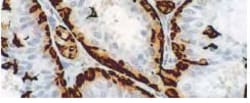
Leica Biosystems NOVOLINK POLYMER DETECTION KIT
The Novolink Polymer Detection Systems utilize a novel Compact Polymer technology. Therefore, the problem of non-specific staining that can occur with Streptavidin/Biotin detection systems due to endogenous biotin does not occur. Novolink Polymer Detection Systems contain pre-diluted, reagents in color coded bottles for ease of use and ultimate convenience.These systems can be used for the visualization of mouse IgG, mouse IgM and rabbit IgG primary antibodies.These detection systems contain Peroxidase Block, Protein Block, Post Primary Block, Novolink Polymer, DAB Chromogen, Novolink DAB Substrate Buffer (Polymer) and Hematoxylin.


Biotium CD7(B-F12), CF488A conjugate, 0.1mg/mL
Recognizes a protein of 40 kDa, identified as CD7 (also known as gp40, Leu9). CD7 is a member of the immunoglobulin gene superfamily. Its N-terminal amino acids 1-107 are highly homologous to Ig kappa-L chains whereas the carboxyl-terminal region of the extracellular domain is proline-rich and has been postulated to form a stalk from which the Ig domain projects. CD7 is expressed on the majority of immature and mature T-lymphocytes, and T cell leukemia. It is also found on natural killer cells, a small subpopulation of normal B cells and on malignant B cells. Cross-linking surface CD7 positively modulates T cell and NK cell activity as measured by calcium fluxes, expression of adhesion molecules, cytokine secretion and proliferation. CD7 associates directly with phosphoinositol 3'-kinase. CD7 ligation induces production of D-3 phosphoinositides and tyrosine phosphorylation.Primary antibodies are available purified, or with a selection of fluorescent CF Dyes and other labels.
Biotium CD45RA(158-4D3), CF488A conjugate, 0.1mg/mL
Recognizes a protein of 205 kDa-220 kDa, identified as CD45RA (Workshop III). CD45RA is isoforms of the human leukocyte common antigen (CD45). Human CD45 contains three exons which encode peptide segments designated A, B and C, respectively. The differential splicing of the exons generates at least five isoforms, ABC, AB, BC, B and O. This antibody reacts with ABC and BC isoforms. CD45RA is expressed on 40-50% of peripheral CD4 T-cells, 50% of peripheral CD8 T-cells, B-cells, and leukemic B-cell lines. T-cells expressing CD45RA are naive or virgin T-cells. T-cells expressing CD45RO are memory T-cells. CD45RA and CD45RO define complementary, predominantly non-overlapping populations of resting peripheral T-cells. This MAb is useful in study on the subpopulation of CD4 or CD8 T-cells. It can especially be used to differentiate T-cell lymphomas (CD45RO positive) from B cell lymphomas (CD45RA positive).Primary antibodies are available purified, or with a selection of fluoresc
Biotium HER-2 / CD340(HRB2/273), CF488A conjugate, 0.1mg/mL
This MAb is specific to c-erbB-2/HER-2 and shows minimal cross-reaction with other members of the family. C-erbB-2/HER-2 is a member of the EGFR family. Receptors of this family are located on the plasma membrane and consist of an extracellular ligand-binding domain that is connected to a large intracellular domain by a single transmembrane sequence. c-erbB-2/HER-2 protein is over-expressed in a variety of carcinomas especially those of breast and ovary.Primary antibodies are available purified, or with a selection of fluorescent CF Dyes and other labels. CF Dyes offer exceptional brightness and photostability. Note: Conjugates of blue fluorescent dyes like CF405S and CF405M are not recommended for detecting low abundance targets, because blue dyes have lower fluorescence and can give higher non-specific background than other dye colors.
Chondrex Inc Sirius Red Total Collagen Detection Assay PLATE Kit
Sirius Red Total Collagen Detection Assay PLATE Kit
Biotium Calnexin (Endoplasmic Reticulum Marker) (CANX/1541), CF568 conjugate, 0.1mg/mL
Calnexin is a type-I integral membrane protein of the endoplasmic reticulum (ER). It is a calcium-binding chaperone protein that interacts transiently with newly synthesized N-linked glycoproteins, facilitating protein folding and assembly. It may also play a central role in the quality control of protein folding by retaining incorrectly folded protein subunits within the ER for degradation.Primary antibodies are available purified, or with a selection of fluorescent CF Dyes and other labels. CF Dyes offer exceptional brightness and photostability. Note: Conjugates of blue fluorescent dyes like CF405S and CF405M are not recommended for detecting low abundance targets, because blue dyes have lower fluorescence and can give higher non-specific background than other dye colors.
Biotium CD3e (T-Cell Marker)(OKT3), CF488A conjugate, 0.1mg/mL
Recognizes the epsilon-chain of CD3, which consists of five different polypeptide chains (designated as gamma, delta, epsilon, zeta, and eta) with MW ranging from 16-28 kDa. CD3, also known as T3, is a member of the immunoglobulin superfamily that plays a role in antigen recognition, signal transduction, and T cell activation. It is found on all mature T-lymphocytes, NK, T-cells, and some thymocytes, and is expressed, typically at high levels, on peripheral T cells and majority of T cell neoplasms. Thymocytes express CD3 at different level on the cell surface in the course of differentiation and CD3 is predominantly intracytoplasmic in cortical thymus.Anti-CD3 clone OKT3 has been reported to have potent immunosuppressive properties in vivo and has been proven effective in the treatment of renal, heart and liver allograft rejection. In the crystal structure of the antibody-receptor complex, clone OKT3 was found to bind a conformational epitope on CD3e dominated by a linear
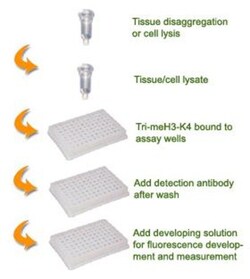
Epigentek Inc EpiQuik Global Tri-Methyl Histone H3K4 Quantification Kit (Fluorometric) (96 assays)
For fluorescence-based measurement of total H3K4me3 amounts
Biotium HLA-DRB (MHC II)(Bra30), CF488A conjugate, 0.1mg/mL
This MAb reacts with the HLA-DRB3 antigen, a member of MHC class II molecules. It does not cross react with HLA-DP and HLA-DQ. HLA-DR is a heterodimeric cell surface glycoprotein comprised of a 36 kDa alpha (heavy) chain and a 28 kDa beta (light) chain. It is expressed on B-cells, activated T-cells, monocytes/macrophages, dendritic cells and other non-professional APCs. In conjunction with the CD3/TCR complex and CD4 molecules, HLA-DR is critical for efficient peptide presentation to CD4 T cells. HLA-DR antigens also occur on a variety of epithelial cells and their corresponding neoplastic counterparts. Primary antibodies are available purified, or with a selection of fluorescent CF Dyes and other labels. CF Dyes offer exceptional brightness and photostability. Note: Conjugates of blue fluorescent dyes like CF405S and CF405M are not recommended for detecting low abundance targets, because blue dyes have lower fluorescence and can give higher non-specific background than

Medchemexpress LLC (E)-9-amino-10-methyl-2-(naphthalen-1-ylmethylene)-1-oxo-1,2,3,4-tetrahydroacridin-10-ium iodide | 2252162-81-3 | 98.1% | C25H21IN2O | 10MG

Aβ/tau aggregation-IN-1 is a small-molecule research inhibitor that reduces aggregation of amyloid-β (Aβ1-42) and tau by preventing β-sheet formation and disrupting aggregate interactions. It demonstrates activity in cell-based tau aggregation assays and has documented physicochemical and storage properties for preclinical use.
- Inhibits aggregation of Aβ1-42 and tau, reducing β-sheet formation.
- Reported KD values ≈160 μM for Aβ1-42 and ≈337 μM for tau.
- Reduces tau aggregation foci at 1 μM in HEK-293T cellular assays.
- High purity (98.1%) suitable for research applications.
- Soluble in DMSO (~33.3 mg/mL); in vivo formulation examples provided.
- Solid storage at 4°C; in solvent store at -80°C for long-term stability.
- For research use only; not for human use.